Showing posts with label Real Estate. Show all posts

Friday, January 8, 2016

Who Do I Hire First?


If you desire becoming what I call a "Lifestyle Agent," or realtor who is able to take time off and continue to generate revenue, one of the most vital steps is to hire someone. This can be disillusioning for some agents, whether they are unsure of their own management skills or nervous about providing their clients less personal interaction. Even worse is the nagging debate of "who do I hire first?"

Let's look at Molly's Muffins as an example. Molly's Muffins is a small bakery its owner Molly had dreamed of owning since childhood. Because of the passion she has already invested in the idea, it seems easy for her to take on all the roles of the business. At first, that is.

After a few weeks of running the register, doing the books, baking, and marketing, it becomes clear to Molly she is bound for a burnout. Not only is she exhausted, but if she were to take time off or fall ill, her doors would close as would her income opportunities. Molly knows it is time to get support and hire help. So many roles seem to exist...which one does she hire to fill?

Her first instinct is to hire someone to do the tasks she tends to enjoy less...mostly cleaning. This seems to be a feasible fix for a moment, until Molly remembers her real problem is not that the store won't be swept when she leaves, it's that income would stop entirely! Having someone to clean the shop and run the registers would indeed be helpful, but what about the books and the marketing calls? Molly knows she must hire a manager who can cover all these tasks in her absence.


Real estate is no different. As an agent, you begin high on passion, opportunity, and money. Soon, your stress is heightened, you find your personal life is lacking, and you just want to relax. It may seem appealing to hire someone to do cold calls, or an assistant to hire your administrative duties. Really, the only position that will allow you to take time off without other facets of your business stalling is an operations manager.

Ready to hire so you can kick back?


Wednesday, December 30, 2015

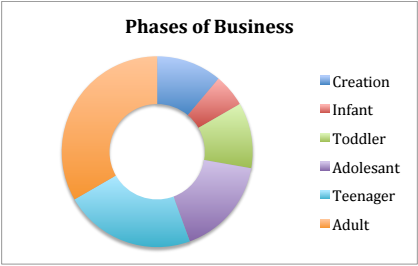
The Six Phases of Business Growth


As the New Year rolls in, many entrepreneurial minded people have focused their resolution around building or improving their business plan. In order to master a business plan, it is necessary to become accustomed to the phases of business, This will help you better predict and diagnose what phase your business is in and act accordingly from an owner standpoint. Growing a business is much like raising a child…


  1. Creation Phase: The Creation Phase is setting parenting standards, a plan, dreams, and goals for your child even before he or she is born. In business, you do this by creating a vision, business plan,and set of standards for the business.


  1. Infancy Phase: In the infancy of a child, as well as a business, is when the needs are the most demanding.  An infant requires constant, focused, attention and the parent must constantly check in to ensure the child’s safety. Consequently, in relation to business, the Infancy Phase is when most quit.


  1. Toddler Phase: During the toddler phase of a business, like a child, the business is learning to do the basic functions consistently. The parent’s (owner’s) attention is still on high alert due to the many dangers that lurk at this phase.  The business is beginning to provide results but they are inconsistent at best.


  1. Adolescence Phase: In the adolescence phase,  the business begins to take a life of its own. It is growing, yet it still can easily get out of control if the parent doesn’t continue to give it constant direction and manage expectations.  Like a child, the owner of the business must consistently measure the results to ensure the business is growing in a healthy manner while keeping an eye out for areas where the it is underperforming.


  1. Teenager Phase: Just like a teenager, the business begins growing faster than the parent’s systems can keep up.  This is where most owners feel things are getting too crazy and decide to pull back.   Instead of pulling back, the owner can anticipate the and build the business plan, processes, and systems to prepare.  This is where the owner must plan accordingly by preparing to let go of controlling all aspects of the business and GET OUT OF THE WAY of restricting the natural business growth.


  1. Adult Phase: Like a child,  you wish for your business to become independent someday. The Adult Phase is when the business continues to grow and to consistently meet the standards without having to rely on the owner for day-to-day operations. Once the business reached adulthood, to avoid becoming aged and irrelevant to the marketplace, the business must plan to reinvent itself thus,moving back to infancy, and the cycle continues.


Now that you are aware of the phases of business, take a moment to reflect:


  • What phase of business is your real estate business in?
  • How will you, as the owner, manage and optimize your business throughout each phase?
  • What preparation will be required for each phase?

Learn more on how to build your real estate business and become a Lifestyle Agent by downloading more educational resources or booking a free consultation call at www.seanmoudrycoaching.com!

Tuesday, December 1, 2015

Path to Success: Ben Caballero


Ben Caballero, acclaimed realtor and  CEO of  HomesUSA is a great example of using vision, passion, and innovation to create a path to real estate success. He was voted the #1 real estate professional in sales volume and transaction sides by the Wall Street Journal, and Most Innovative Real Estate Agent by Inman News, and received the 2014 Pinnacle Award for Real Estate Entrepreneurship.

Caballero began real estate in Dallas, Texas at the age of 21, after his mother's car broke down in the city and, he says, the people were so helpful he decided to stay. His initial marketing technique was cold calling apartment builders from pay phones to share his business plan, and scheduling face to face meetings with as many as possible, allowing him to immediately create personal relationships with his prospects. From here, he built and maintained many exclusive relationships with exclusively high volume builders by offering unique time saving services for his clientele. Caballero claims he never has goals, just a vision: to improve his specialty more and more each year,

The recurring themes in Caballero's success seem to be creativity, consistency, and market exclusivity. Until recently, Caballero had never launched a marketing campaign. His clientele was gained strictly through direct contact with high volume builders. Currently, he works with about 30.
Efficiency seems to be another key to the appeal of Cabbalero, as now that he has hired two assistants and a technical support team along with an exclusive platform for personalized reports he is able to achieve a 13 minute turnaround on listings. Builders appreciate the amount of time he saves them in turn.

Interested in learning more ? Here is an Inman interview with Caballero, covering the HomesUSA business plan and what it made it stand out:


While it can be helpful to follow in the footsteps of someone who achieves the success you seek,the true way to achieve it is to receive guidance toward your own success. Learn more about how I can give you personalized guidance to achieving the real estate business you envision at seanmoudrycoaching.com.

Wednesday, November 25, 2015

The Four Paradigms of Goal Setting


Where do you believe you are in your goals now? Where would you like to be in 5 years?

The four paradigms of goal setting are the abstract, reality, comparing and achieving. In this video, I show you how to shift through paradigms and set realistic goals without limiting yourself, and create a clear path to completion.

Would you like professional guidance on your path to taking the step from living to thriving? Feel free to write yourself into my schedule for a free 30 minute business planning consultation!

Tuesday, November 17, 2015

Real Estate Marketing Hacks: Creating a Client Persona


One of the biggest mistake businesses make in marketing is communicating a generic voice and mission. Having a cookie-cutter marketing methodology is a guarantee you will soon be facing the frustration of feeling as if you are shouting into the void.

Many real estate agents know better than to recycle redundant marketing language,  so why does this happen so often? Because realtors tend to be results driven, and while creating a voice for our business seems the easiest task at first, we soon find it takes more planning than we imagined. As valuable “money making” time ticks away and a message is not perfected, it is easy to default to what you often hear and see as opposed to perfecting a message of your own.

To save time and anguish in this process, it is highly useful to first focus not on the voice you will be projecting, but the ears you would like it to land upon. Creating a Client Persona enables you to do just this. Follow this step by step guide to defining your target tribe and begin generating leads that matter.


  1. Define their “why”: By now, you are probably gaining a better definition of your reasons for being in real estate. Now what about their reason for needing real estate service? Or perhaps they don’t need  your services yet...where could these services fill the gaps in their life regardless? Put yourself in the shoes of home buyer’s and seller’s, and think of personal ways you can reach out to them. Some reasons may be:
    1. A major life transition: kids moving out, death in the family, new job opportunity
    2. An increase/decrease in income
    3. Seeking stability and control (renting vs. buying)
    4. Too much stagnance, wanting a change
    5. A sparking interest in real estate themselves
    6. Need for creative freedom on a home

  1. How can you personally cater to or complement each reason your client may have to need your services? What sets you apart from other realtors to make the home buying or selling experience a memorable and educational process? Some of these traits may include:
    1. Personal experiences: relating firsthand to their journey
    2. Finding homes for a specific budget, whether it be a tight budget or one suited for luxury
    3. Making shy or inexperienced people feel comfortable
    4. Being available to advise at odd hours

  1. Using these reflections, create a hypothetical person to represent the market you are defining, and a profile for that person. Include details that may seem irrelevant but in the end, affect  their buying, such as::
    1. Job title/ income bracket
    2. Location (current and desired)
    3. Age
    4. Daily routine
    5. Goals
    6. Fears
    7. Education
    8. Family
    9. Values

  1. Create an elevator pitch to this “person.” Be sure to include how much you know and care about their needs, and ensure them you are the person who will meet them.

  1. Plan your content using the “Four Archetypes for Content Creation Strategy.” This will allow your content  to appeal to a wide range of your client’s feelings and needs while still remaining business appropriate.


Once these steps are complete, your target market should begin feeling like an old friend, and just as with old friends, communication will begin to flow almost effortlessly. Ready to take the next step and allow other facets of your business to run successfully on auto-pilot? Sign up for your choice of access to exclusive material to help you solve the Time vs. Money paradox, a free consultation call, or both here.

Tuesday, November 3, 2015

Listing Presentation Must-Have's


Any great sales person has a presentation they know will consistently get them results.  Don’t you wish you could shadow what these top agents are saying at their appointments to get those listing signed? We bring you the next best thing... an insider perspective on what top agents are prepared with for any successful listing presentation.


  • Solid Marketing Strategy: You probably have already noticed a marketing strategy is valuable to almost any facet of your real estate business. Having a solidified marketing strategy prepared for presentation provides immediate comfort to the sellers in knowing their selling process will be well planned and personalized.

  • Experience and Testimonials: Getting to know your personal purpose for selling home makes your presentation stand out. This is a great way to list your accomplishments and benefits only you can provide them.

  • A Play-by-Play: Provide a simple, yet detailed play-by-play of the home selling process, what you will provide for them along the way, and what methods you plan to implement at what times. Be sure they feel educated on the entire experience.

  • Your Guarantee of Service: Emphasize that in an agent/seller relationship, you are on a team and their success is your success. Provide a personal guarantee of service to ensure follow through.

  • Pricing Strategy: According to zillow.com, this is best to present last. Potential clients are much more likely to accept your numbers once they are educated on the amount of time you are willing to spend helping them, and the details that go in to the selling process.


Now that you have the proper outline for a listing presentation, give it a shot and pay close attention to what methods work best for you. Once you have begun to master listing presentations, take it to the next level by recruiting a coach to help you continue success in every facet of your real estate business. Learn more at seanmoudrycoaching.com.


Wednesday, October 28, 2015

The Top 3 Focus Points for Effective Monthly Marketing


What do I send? How often do I send it? When it comes to monthly marketing, a common method of self-sabotage is “paralysis by analysis.” Focusing too much on small details can lead to a marketing campaign not being sent at all. Sound familiar? End the habit today!  Here are the most important focus points for your monthly marketing in order of importance:

1)      Clearly communicate Real Estate as your industry at first glance. Most marketing items have the potential of being hand-to-trash items. Assuring your purpose is clearly visible at a glance will attract the eye of those seeking your services, and can prevent your advertising pieces from facing this fate.


2)     Showcase your success and what sets you apart from other realtors. This can be uncomfortable for some, as it can be assumed this is a type of bragging. Put yourself in the potential client’s shoes, however, and I’m sure you will understand the benefits of knowing the potential of a realtor you may choose.


3) Create a unique call to action. Be sure your call to action is tailored to properly pipeline leads according to your marketing plan. For example, if social media is a vital part to your brand’s promotion, be sure to include links to your pages in addition to your basic contact information.  Make the call to action simple, yet visually accessible. Offer an additional service to your call to action to increase the urge to contact you versus other local real estate agents. Avoid redundant sales verbiage whenever possible.                                                                            


Once you have these three focus points covered, you are finished! Send it out and watch the leads roll in. Pay special attention to your most effective methods of advertising in order to perfect future campaigns. 

Thursday, October 22, 2015

Real Estate: Tools for Creating the Perfect Business Plan


If you were to open a specialty muffin shop on main street America, you wouldn’t do it without a business plan… so why would you operate your real estate business without one?  A business plan is vital in properly kick-starting your marketing, branding, and clientele type. Here are a few tools to help kickstart your 2016 business year...


 Reverse Lead Calculator:  The Reverse Lead Calculator by Market Leader is a handy tool for goal setting. Simply enter your commission goals, how many leads you currently generate,  the average price per home in your area, your average commission and the average lead close rate, and the Reverse Lead Calculator will determine the amount of leads per month, total leads, and home sales you will need in order to reach your goal. It even provides a pie chart to help you with what types of leads you should be generating.

http://marketleader.com/leadcalculator/


  S.W.O.T Marketing Template:  S.W.O.T stands for Strengths, Weaknesses, Opportunities, Threats. A S.W.O.T analysis  is an extremely useful tool for marketing strategy or any new business implementations that may be proposed.

http://www.smartdraw.com/swot-analysis/examples/real-estate-swot-analysis/


·         Real Estate Business Plan Template by Placester:  This template will save you hours of formatting and research.  It targets real estate specific details many overlook that can make all the difference in your business’ earning potential. 


https://placester.com/real-estate-marketing-academy/real-estate-business-plan-template/


Supplement  these tools with the guidance of a qualified real estate coach, and watch the leads pour in! Enjoy your new-found motivation.